ByJohn A
How Fog Computing Reduces Network Congestion
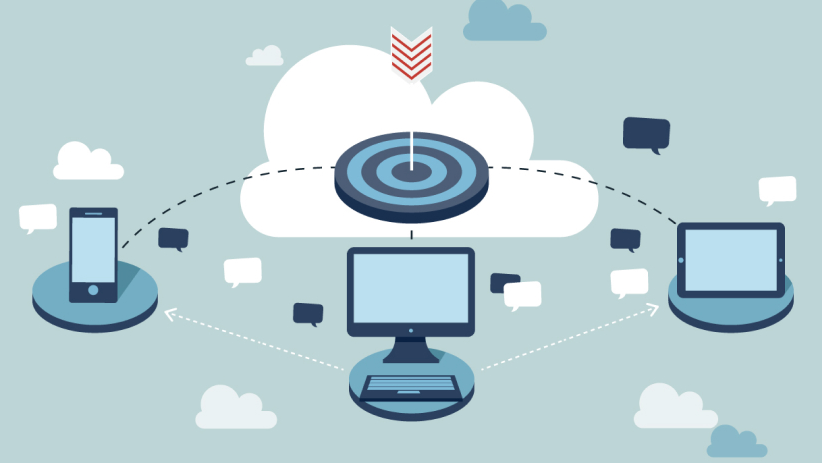
Fog computing shifts data processing closer to sources, reducing unnecessary travel to centralized clouds. Edge analytics filter, aggregate, and summarize locally, lowering backhaul usage and freeing bandwidth for critical apps. Localized processing also cuts latency and enables rapid, autonomous decisions. Yet, the approach introduces new deployment trade-offs and management complexities. Understanding these dynamics will clarify how fog strategies can meaningfully ease network congestion while preserving performance and control.
What Fog Computing Is and Why It Fights Congestion
Fog computing brings computation, storage, and analytics closer to the edge of the network, bridging the gap between end devices and centralized cloud services. It enables distributed decision-making, improves data locality, and supports scalable edge routing. By embracing fog symmetry and congestion pricing, networks balance loads, reduce backhaul, and empower autonomous optimization for freedom-loving infrastructures.
How Edge Processing Reduces Latency and Backhaul Load
Edge processing shifts computation and analytics closer to data sources, enabling decisions to occur without traversing the core network. It reduces round‑trip time by localizing tasks, exploiting data locality and faster sensor feedback.
Latency implications include faster response to events and improved user experience, while backhaul load declines due to distributed processing. Strategic deployment emphasizes edge capacity, interoperability, and predictable performance.
See also: techdaytimes
Key Trade-Offs When Pushing Data to the Fog
Key trade-offs arise when pushing data to the fog: balancing processing locality, bandwidth use, and security with resource constraints and reliability.
The assessment weighs data locality against centralized processing, preserving responsive analytics while minimizing transport.
Energy efficiency emerges as a design criterion; reduced transmission saves power, yet local compute may increase local consumption.
Strategic choices optimize latency, cost, and resilience without sacrificing freedom to innovate.
Practical Steps to Implement Fog Strategies for Congestion Relief
To reduce network congestion through fog strategies, organizations should architect a layered deployment that places compute and analytics close to data sources while maintaining clear pathways to centralized resources. Practically, establish governance for latency budgeting and bandwidth tailoring, configure edge nodes for streaming and short-lived processing, and implement adaptive routing, monitoring, and failover to sustain predictable performance under fluctuating workloads.
Frequently Asked Questions
How Does Fog Compute Affect Data Sovereignty and Privacy?
Fog computing influences data sovereignty and privacy by localizing data processing, reducing exposure, and enabling policy-driven controls. It mitigates privacy concerns through selective data retention, but demands robust governance, encryption, and transparent cross-border data flow management for freedom-aware adopters.
What Are the Hidden Costs of Fog Deployment?
Hidden costs arise from fog deployment, including hardware, software, and maintenance burdens; data sovereignty considerations complicate governance. The analysis highlights lifecycle spending, integration overhead, and risk management as strategic imperatives for organizations pursuing decentralized, freedom-minded edge architectures.
Can Fog Reduce Congestion for Intermittent, Bursty Traffic?
Fog can reduce congestion during intermittent bursts by processing near devices; edge caching mitigates bursts, delivering quicker responses. Yet privacy concerns, data sovereignty, hidden costs, deployment scalability, and network relief metrics shape global IoT strategies.
How Scalable Is Fog for Global Iot Deployments?
Fog computing shows strong scalability for global IoT, enabling hierarchical orchestration and edge sovereignty. Deployment scale is constrained by interop standards, orchestration complexity, and security governance, yet federated architectures support broad geographic reach and resilient data processing.
What Metrics Best Measure Fog-Induced Network Relief?
Ironically, the metrics are straightforward: latency reduction and edge analytics improvement define fog relief; the metrics indicate network strain easing, enabling autonomous decision-making, reduced backhaul, and predictable performance, with governance-friendly transparency for freedom-loving operational teams.
Conclusion
Fog computing stands as a strategic orchestration of near-source processing, filtering, and local decision-making. By pushing analytics to the edge, it reduces backhaul traffic and trims latency, enabling faster, more reliable services. The result is a leaner core network and a more responsive user experience, achieved through careful placement, governance, and data-pruning. In this landscape, fog acts as the backbone of congestion relief—a quiet engine driving efficiency, like a lighthouse guiding ships through crowded channels.